If you park in an attached garage in Miami Beach, you have probably noticed it by July: the inside of the door is wet, the floor near the threshold is damp, and the hardware looks like it spent the night outdoors. The door is not leaking in the usual sense. It is sweating, and the difference matters, because a door that is wet on the inside is a symptom of how the space is ventilated and how the air moves through it, not a hole in the roof. What that moisture does over a summer is another matter, and it is the part worth understanding before you assume the door itself is failing.
Why the door sweats and the concrete does not
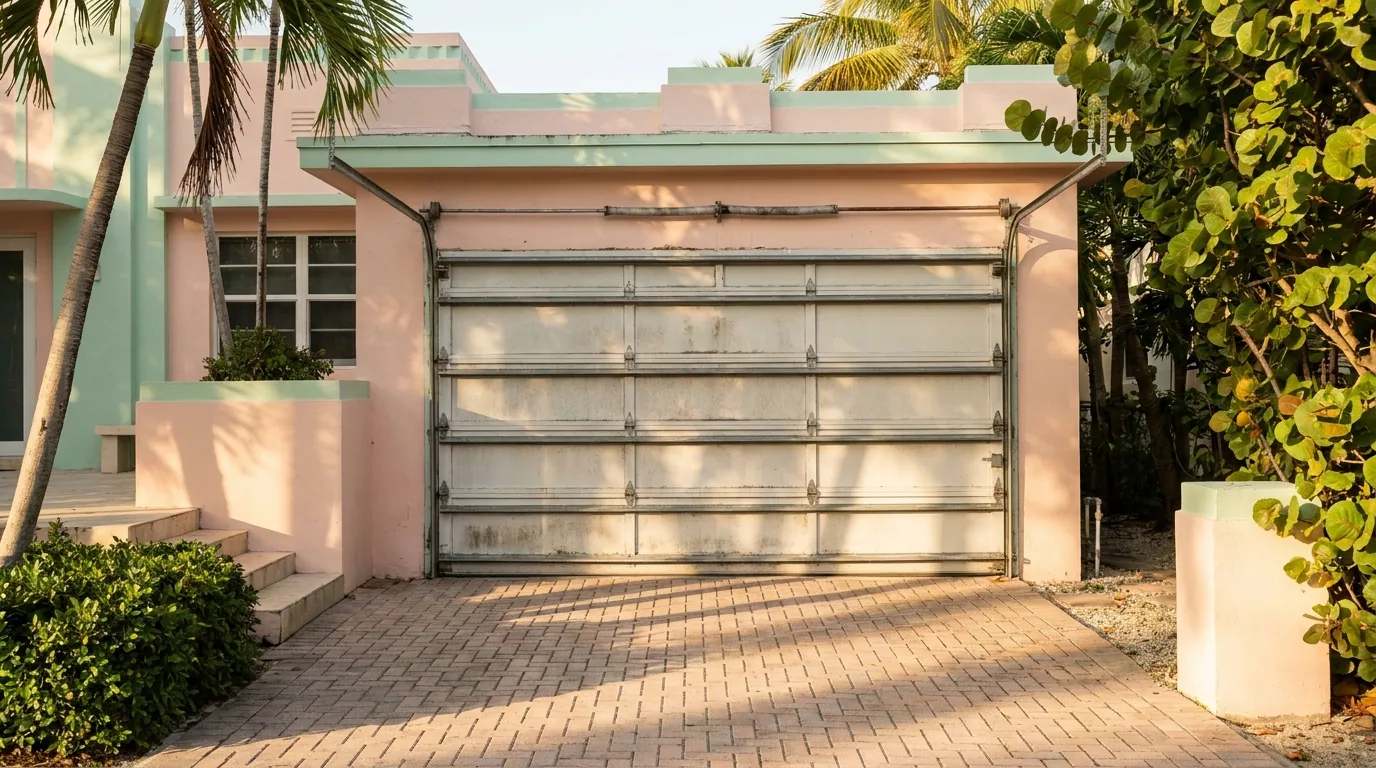
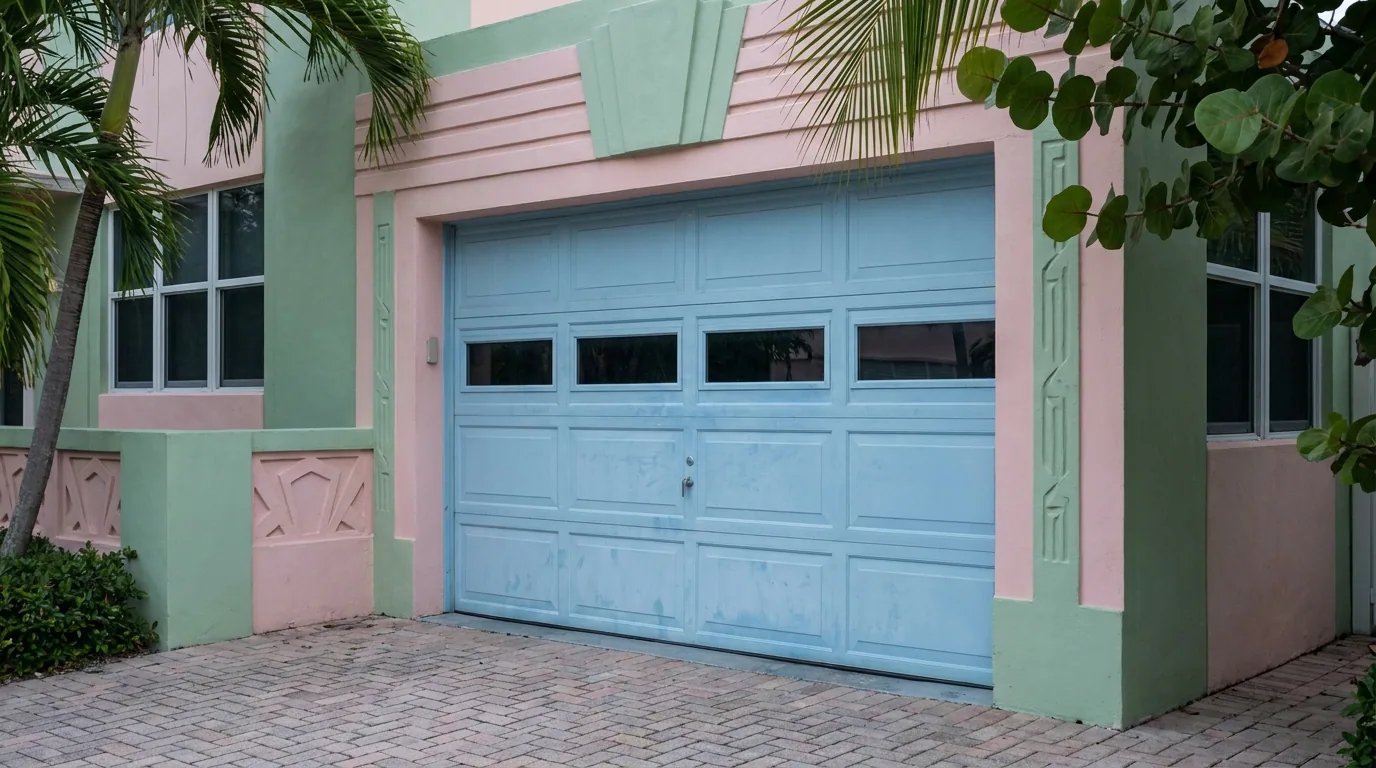
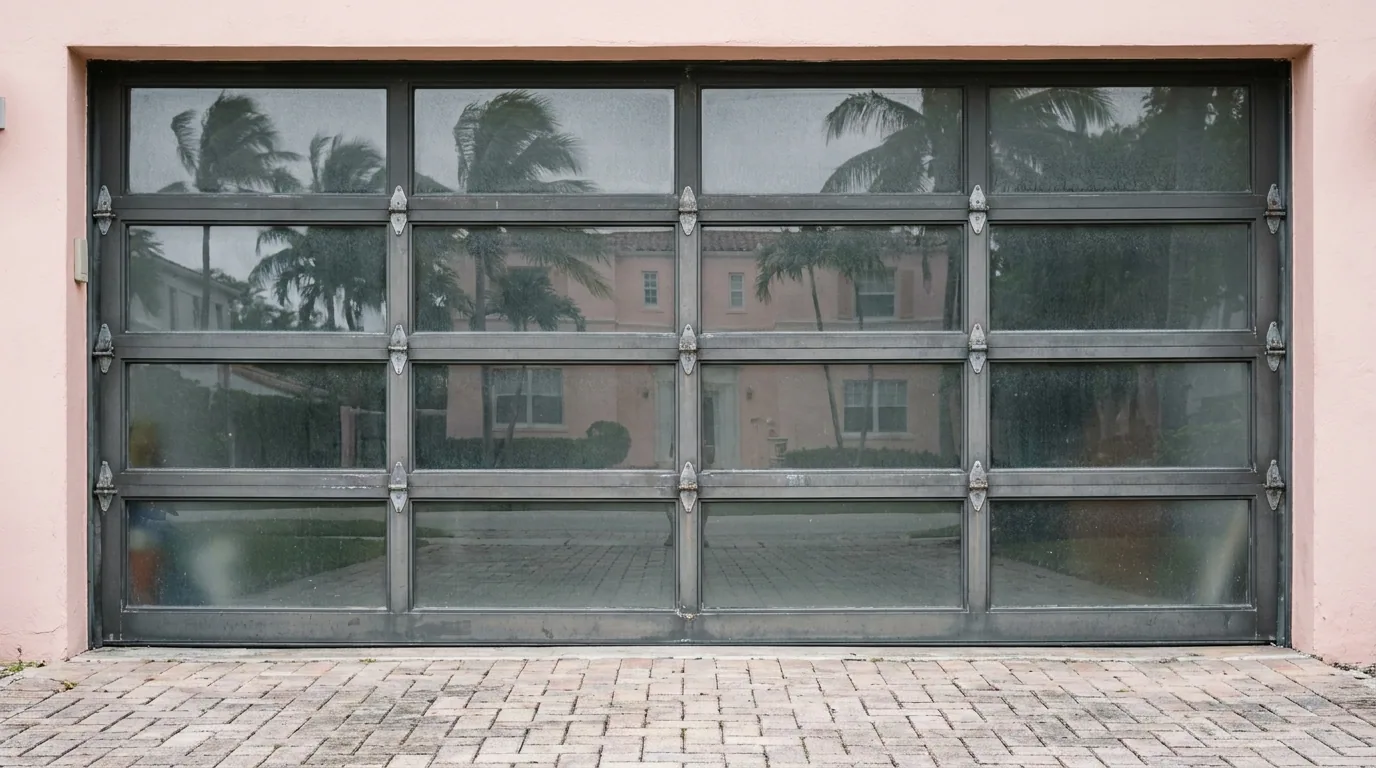
In summer, the air in Miami Beach is warm and carries a lot of water vapor. A garage door is usually the largest, thinnest metal surface in the house, and if it is a single-layer steel door with no insulation, it stays cooler than the air around it, particularly the panels low to the ground that sit in shade through the morning. When warm, humid air meets a surface cooler than its dew point, water condenses on it. That is the whole mechanism. The door is not absorbing water and it is not leaking; moisture from the air is settling on the coolest thing it can find.
An uninsulated door sweats more than an insulated one because the steel face has less between it and the outside temperature. A door on a wall that gets sun early and shade later can sweat on the inside while the outside is dry. This is normal physics, not a defect, and it will happen on any uninsulated door in this climate during the wettest weeks of the year.
Where the water actually goes
The condensation itself is harmless to the door face. What matters is where it runs. Water beads on the panels, runs down the inside face, and collects along the bottom section, the bottom seal, and the tracks. It also drips onto the floor and into the gap under the door, where it sits against the threshold. In a garage with no floor drain and no cross-ventilation, that water has nowhere to go until the air dries out.
The result is a garage that stays damp for days after the visible sweating stops. The floor near the door stays slick. Cardboard, paper, and anything stored against the wall near the threshold picks up moisture. And the steel hardware that lives in that damp band, the bottom brackets, the hinges on the lower panels, and the roller shafts, is exposed to water on and off all summer.
What the moisture does to the tracks and hardware
Steel tracks and steel hinges do not fail from one wet season. They fail from the pattern: wet, then dry, then wet again, with salt air in the mix on the barrier islands. Rust forms on the track surface and inside the roller races, and a rusted roller no longer rolls. It drags. A dry steel roller on a clean track is quiet; a roller with a rough, corroded race makes a grinding or scraping sound through part of the cycle, and the door may begin to bind at the point where that roller passes a track joint.
You can hear this from inside the garage without touching anything. Run the door through a full cycle and listen for a scrape that repeats at the same spot in the travel each time. That repetition is the clue. A noise that comes and goes with the weather is one thing; a scrape at the same point every cycle points to a roller or a track joint, and a technician can confirm which by hand.
Moisture also works on the bottom section and its seal. A bottom seal that stays wet develops a musty smell and can stiffen or tear, which lets more air and water under the door and makes the next cycle wetter. The bottom brackets and the lower hinge plates are the parts closest to the floor and the most exposed, and they are the ones a technician typically finds corroded first.
What you can check, and what to leave alone
With the garage empty and the door closed, stand inside and note where the wetness collects: the bottom panels, the floor line, or the whole door face. Look at the floor near the threshold after a humid night and see whether water is pooling there. Run the door once and listen for repeating scrapes. Note whether the door feels heavier when you lift it by hand with the opener disengaged, which is a normal homeowner check.
Do not inspect the springs or cables yourself, and do not touch them. A torsion spring under load, a cable under tension, and the opener drive train are technician work. What you can report is what you observe from outside the mechanism: the door sitting crooked, a gap along the top, the door feeling heavier than it used to, or a new noise at the start of a cycle. Those observations are what a technician needs to narrow the problem before arriving.
Reducing the sweat and protecting the hardware
The most effective long-term measure is insulation. An insulated door or an insulated panel set keeps the inside face closer to the outside temperature, which reduces condensation at the source. A proper weather seal at the bottom and sides also limits the humid air that reaches the door face and keeps water from running under the door onto the floor.
Ventilation helps too. A garage that can exchange air with the outside dries out faster than one sealed tight, and a small fan moving air across the door face reduces the time moisture sits on the steel. Keep stored items off the floor near the threshold so they are not sitting in the damp band.
For the hardware, the practical answer is periodic service rather than a one-time fix. A tune-up and safety inspection lets a technician clean and lubricate the rollers and hinges, check the track for corrosion and alignment, and replace the parts that have already started to fail before they bind the door. In this climate, that service is worth doing on a schedule rather than waiting for a noise. If your door is sweating, scraping, or feeling heavier than it should, call 911 Garage Door Repair & Service of Collins Miami at (786) 709-9487 or email info@911garagedoorrepairmiami.com. The company is licensed and insured and serves Miami Beach and the surrounding communities in Miami-Dade County.