A garage door is the largest moving assembly in most homes, and it is also the one homeowners are most tempted to tinker with. Some of that upkeep is genuinely safe and worth doing on a Saturday morning. Some of it can cause serious injury. The difference is not about how confident you feel with tools — it is about which parts store energy and which parts do not. This article walks through the work a homeowner can reasonably take on, and the work that should go to a licensed and insured technician.
Start with the door closed and the opener unplugged
Before any maintenance, close the door fully and disconnect the opener. On most units that means pulling the emergency release cord and unplugging the motor from the outlet. With the door down and the opener out of the picture, nothing is under tension from the motor and the door is resting on the floor. That is the safe starting position for everything described below.
If the door will not close, or if it is sitting crooked in the opening, stop here. A door that hangs at an angle usually has a cable or spring problem, and that is not a homeowner job. Call a technician.
What you can safely do yourself
Wipe down and lubricate the track and rollers
Dirt and grit in the track cause most of the noise and drag homeowners notice. Use a rag and a mild household cleaner to wipe the inside of the vertical and horizontal tracks. Do not use solvent, and do not scrape with metal. Once clean, apply a garage-door lubricant — not WD-40, not cooking oil — to the rollers and to the pivot points at the hinges. A dry steel roller on a dry track will squeal; a light film of the right lubricant quiets it without attracting dust.
Check and tighten the hardware you can reach
With the door down, run a screwdriver over the hinge screws and the bracket bolts that hold the track to the jamb. Vibration loosens them over time, and a loose bracket lets the track shift. Snug them, do not overtighten. If a bolt spins freely in its hole, the wood or metal behind it has given way, and that is a technician's repair — the bracket needs to be re-anchored properly, not packed with a bigger screw.
Test the safety reverse
This is the single most important check a homeowner can do, and it takes under a minute. With the door open, place a piece of wood or a rolled towel flat on the floor in the door's path. Press the wall button to close the door. The door should reverse when it contacts the object. If it does not, the opener's force or travel settings need adjustment, and that is a service call.
Keep the photo-eyes clean and aligned
The two small lenses near the floor at the sides of the opening are a safety device on the closing travel only. Wipe them with a soft cloth. If the door reverses while it is closing and the lenses are dirty or one has been knocked out of line, cleaning and realigning them usually solves it. Note that a door that reverses before it reaches the floor, or that opens a little and then stops, is not a photo-eye problem — that is a travel-limit or force-setting issue, and it belongs to a technician.
Clear the opening and the tracks
Remove anything leaning against the tracks, sweep debris out of the door's path, and check that nothing is stored so close to the door that it can catch a panel as the door comes down. This sounds trivial and prevents a surprising number of panel dents.
What you should not touch
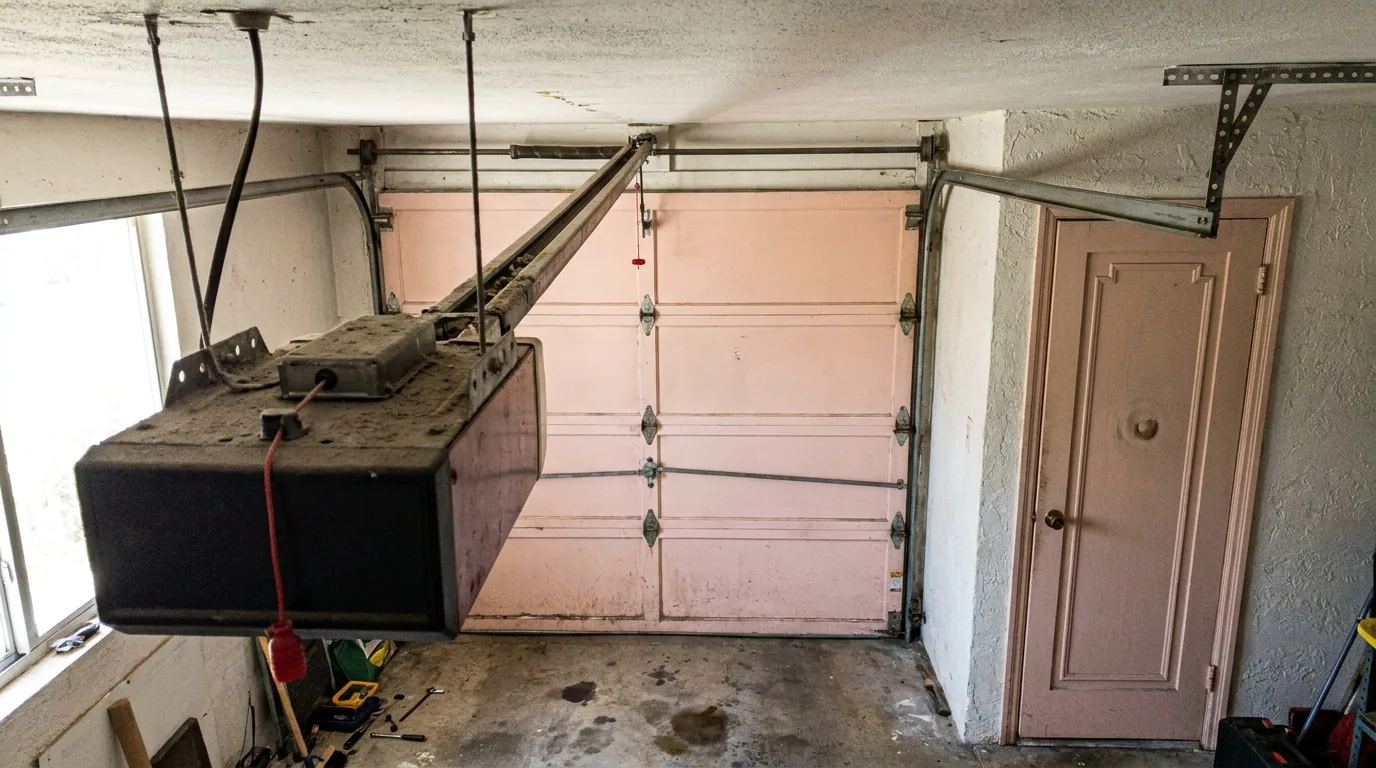
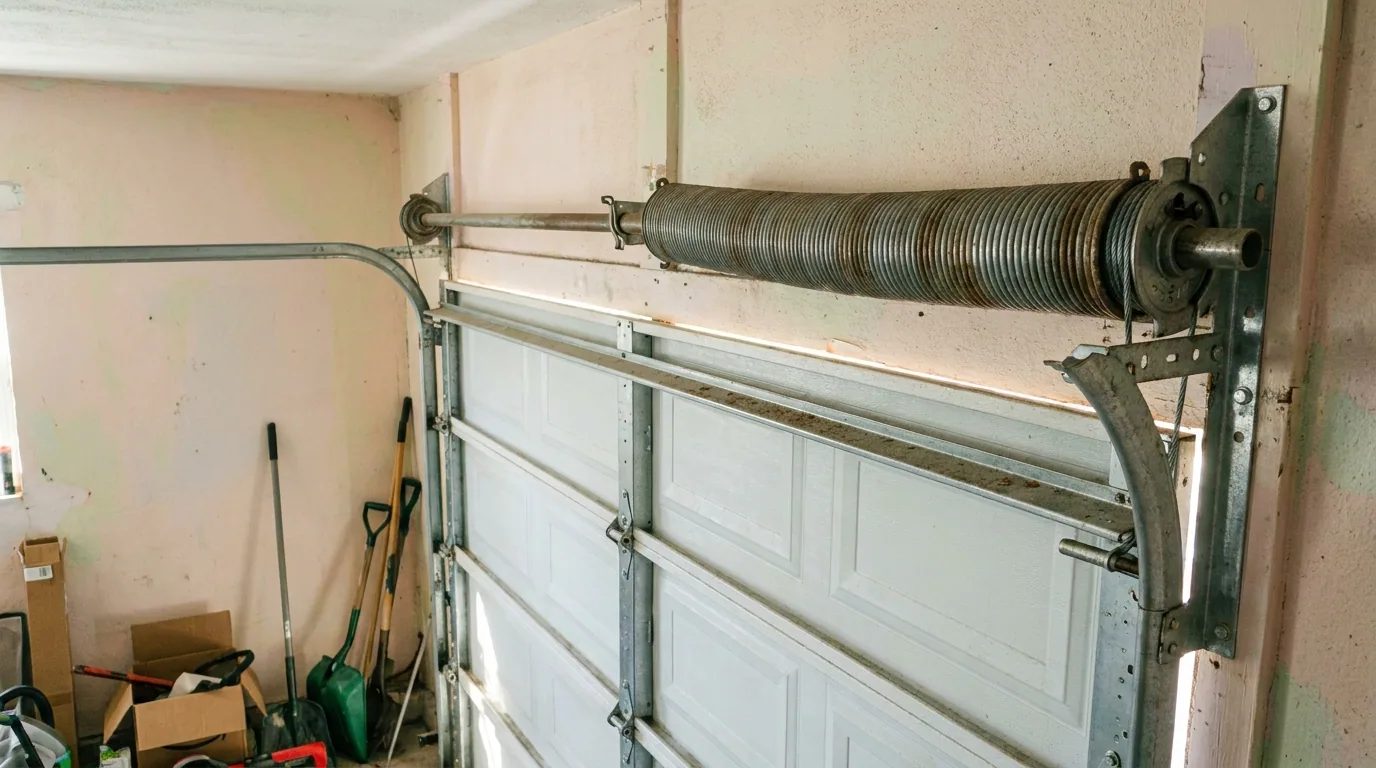
Torsion springs, extension springs, cables, and the opener's drive train are off limits. Torsion springs store enough energy to cause serious injury, and cables are under constant tension. Do not try to adjust, lubricate, or inspect them yourself. If you notice the door feels heavier than usual when you lift it by hand, or if you hear a sharp bang from the garage and the door will not open, the spring has likely failed. A broken torsion spring cannot hold the door's weight, and the door needs a technician before it is operated again.
The same goes for the opener's internal gears and the rail assembly. If the motor runs but the door does not move, a stripped gear is a common cause, and the repair means opening the unit — not a homeowner task.
What salt air does, and how to slow it
In Miami Beach and the surrounding areas we serve, salt air accelerates corrosion on steel hardware. Hinges, rollers, and track brackets that would last years inland can seize or pit faster here. A quarterly wipe-down of the hardware with a clean rag and a fresh application of garage-door lubricant is the simplest defense. If you see rust blooming on a hinge or roller, replace that part rather than waiting for it to seize — a seized roller drags on the track and puts strain on the opener.
When to call a technician
Call for a service visit if the door sits crooked, if it reverses before reaching the floor, if the opener runs without moving the door, if you hear a loud bang followed by a door that will not lift, or if the door feels noticeably heavier than it used to. A licensed and insured technician can inspect the springs, cables, and opener drive train safely and tell you what actually needs attention. If you are in Miami-Dade County and want a hand with any of the above, 911 Garage Door Repair & Service of Collins Miami can be reached at (786) 709-9487 or info@911garagedoorrepairmiami.com.