A door that reverses on its way down sends most homeowners straight to the small units mounted near the floor on each side of the opening. Sometimes that instinct is right. Often it is not, and the time spent adjusting a part that was never at fault is time the real problem keeps running. The useful thing to understand is that the photo-eye has one narrow job: it reverses a door that is closing when something breaks the beam between the two units. It plays no part in a door that will not start at all, a door that opens a little and then reverses, or a door that stops short on the way up. Those are travel-limit or force-setting problems at the opener head, and they belong to a technician. What follows is how to sort the photo-eye question out from the outside, using your eyes and a cloth, with your hands kept off the springs, cables, and opener drive train.
First, name the symptom precisely
Before you do anything else, watch one full cycle and describe what happens in plain terms. Does the door travel down most of the way and then go back up? Does it reverse the instant it starts down? Does it refuse to move at all? Does it stop partway up?
Only the first two patterns are consistent with a photo-eye that is blocked or out of alignment, and only because the door is in the closing direction when the beam is interrupted. A door that will not start, or that reverses on the way up, is telling you the photo-eye is not the issue. If you cannot get a clear read on the pattern because the door only misbehaves sometimes, note the conditions — time of day, weather, whether a car is parked in a particular spot — and mention them when you call.
Clear the path, then wipe the lenses
The beam runs in a straight line a few inches above the floor between the two units. It does not bend around objects, and it does not tolerate much. A recycling bin pushed slightly forward, a broom handle leaning against the wall, a bag of potting soil, a bicycle wheel, or a car parked a few inches too far in will all break it. Pull everything out of the opening, clear a generous margin on both sides, and run the door again.
If the path is clear and the door still reverses while closing, wipe the face of each unit with a soft dry cloth. Dust, pollen, insect residue, and the fine film that builds up in coastal air can dull the lens enough to weaken the beam. Do not spray cleaner directly onto the unit and do not remove the cover. A dry wipe of the outer surface is the whole of it.
What the indicator lights tell you — and what they do not
Most photo-eye units carry a small indicator light. On many models a steady light means the unit is receiving the beam; a flickering or dark light means it is not. Reading those lights is useful, and it is safe, because it requires nothing but your eyes.
It is worth being careful about what the lights prove. A steady light on both units tells you the beam is arriving, which is a good sign but not a guarantee that the system is behaving in every respect. A dark light on one unit tells you the beam is not arriving, but it does not tell you why. The cause could be an obstruction you missed, a unit that has been knocked out of aim, a lens that is dirty, a damaged wire, or a failed unit. Separating those possibilities means testing the wiring and the units themselves, and that is bench work for a technician rather than something to attempt at the bracket.
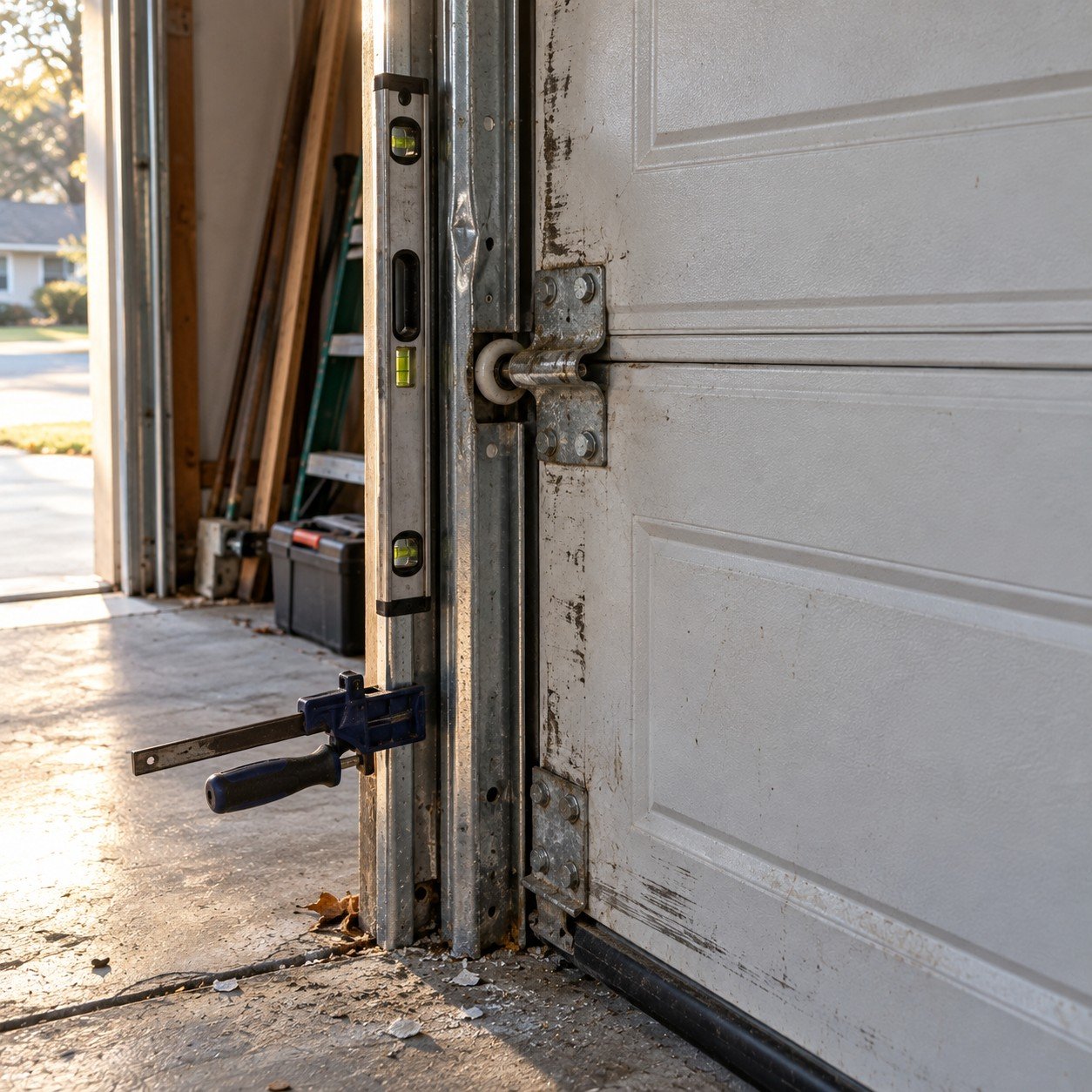
If a light is dark and the path is clear and the lens is wiped, stop there. Do not loosen the bracket screws to re-aim the unit, do not bend the bracket, and do not open the housing. Aiming a photo-eye accurately is a two-person job done with the door in a known position, and a unit nudged by hand into rough alignment can pass a casual test and still fail intermittently later.
When the photo-eye is not the answer
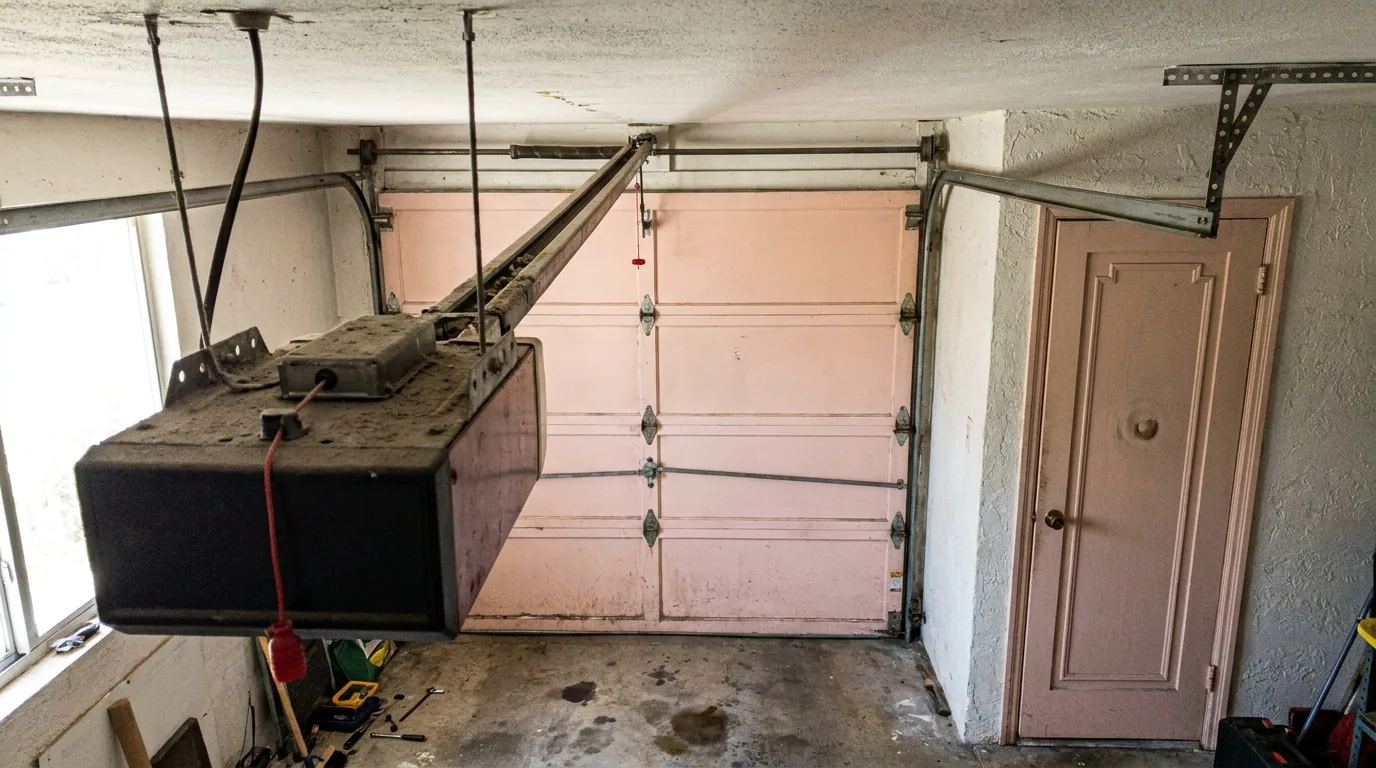
If both lights read steady, the path is clear, and the door still reverses before it reaches the floor, the photo-eye is very probably not your problem. The likely candidates are the travel-limit settings, which tell the opener how far the door should go, and the force settings, which tell it how much resistance to expect before it gives up and reverses. Both live at the opener head. Both require opening the housing and turning adjustment screws, and a wrong setting can defeat the safety reverse function entirely. That is technician work, and it is the single most common reason a door reverses with a perfectly healthy photo-eye.
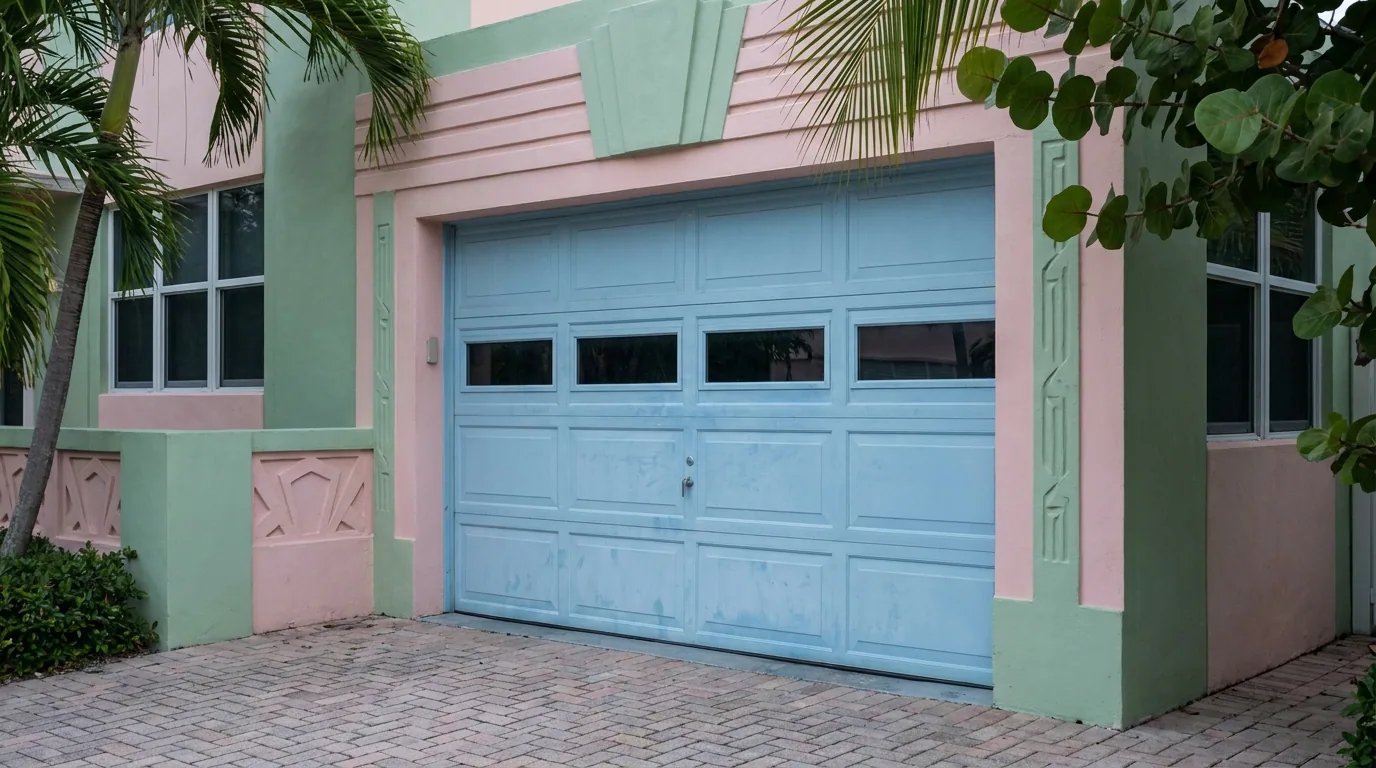
A second possibility is that the door itself has become hard to move — a roller binding in the track, a track knocked out of line, or a spring that is no longer carrying its share of the weight. You do not need to lift the door to gather evidence here. With the garage empty and the door closed, stand back and look at it from outside: does the bottom edge sit level with the floor, or is one side higher? Is there a gap along the top? Does the door look crooked in the opening? When you run it, does it sound heavier or slower than it used to, or does it make a new noise at the start of the cycle? Any of those observations is worth reporting. None of them requires you to touch the door, the springs, or the cables.
What to leave alone, and when to hand it over
The safe homeowner territory is narrow and worth stating plainly: clear obstructions from the opening, wipe the outer lens faces with a dry cloth, watch the indicator lights, and watch the door from outside. That is the list.
Leave the bracket aim, the wiring, the opener housing, the travel and force settings, the springs, the cables, and the drive train to a technician. If you see a door hanging at an angle, a gap that was not there before, or hardware that looks corroded or loose, do not attempt to correct it — a door with a failed spring or cable is holding stored energy and is not something to work around. In Miami-Dade County the coastal air is hard on steel hardware, so brackets, fasteners, and the small parts around the photo-eye can degrade faster than the rest of the system, which is one more reason a technician visit is worth using to have the whole assembly looked over rather than just the one part that got your attention.
If the simple checks above do not settle it, or if anything you have seen points to springs, cables, tracks, or the opener, call 911 Garage Door Repair & Service of Collins Miami at (786) 709-9487. The company is licensed and insured and serves Miami Beach, South Beach, North Beach, Surfside, Bal Harbour, Bay Harbor Islands, Sunny Isles Beach, Golden Beach, Aventura, North Miami Beach, North Miami, Miami Shores, Brickell, Downtown Miami, Hallandale Beach, and Hollywood. Regular hours are Mon–Sat 7:00 AM–8:00 PM, with 24/7 emergency dispatch and Sunday emergency service only. You can also reach the office at info@911garagedoorrepairmiami.com or at 6767 Collins Ave, Unit 509, Miami Beach, FL 33141.