A garage under a bedroom is a common layout in townhouses and in many of the older buildings around Miami Beach, and it puts the largest moving assembly in the house directly beneath someone's pillow. The door itself is not usually the problem. The noise comes from a handful of specific parts, and each one has its own sound. The work of quieting a door is mostly the work of figuring out which part is making which noise, then dealing with that part rather than guessing at the whole assembly.
Start by naming the sound
Before anything is adjusted or replaced, listen to the door through a full cycle with the garage empty. Stand in the garage rather than in the room above, because the room above filters the sound and makes everything sound the same. What you are trying to establish is when the noise happens and what it resembles.
- A squeal or chirp that rises and falls as the door moves. This is usually a dry steel roller turning in its track, or a hinge with no lubrication left in the knuckle.
- A rattle or clatter that starts the moment the opener engages. Loose hardware is the usual suspect: hinge bolts, the brackets that hold the track, or the arm connecting the opener to the door.
- A bang at the very start or the very end of the cycle. That is the door reaching a travel limit hard, or the opener's rail flexing under load.
- A grinding or humming from the motor housing with little or no door movement. That points at the opener itself, not the door, and it should be looked at by a technician.
- A new noise that appeared suddenly, along with the door feeling heavier when you lift it by hand. Stop using the opener and call a technician. A door that has become hard to lift by hand may have a spring or cable problem, and those parts are not a homeowner job.
If the door is sitting crooked in the opening, or if there is a visible gap along the top when it is closed, stop here and call a technician. A door hanging at an angle usually has a cable or spring fault, and running it will make that worse.
What a homeowner can safely do
With the door fully closed, the opener unplugged, and the emergency release pulled so the door is disconnected from the motor, a few things are safe and genuinely effective.
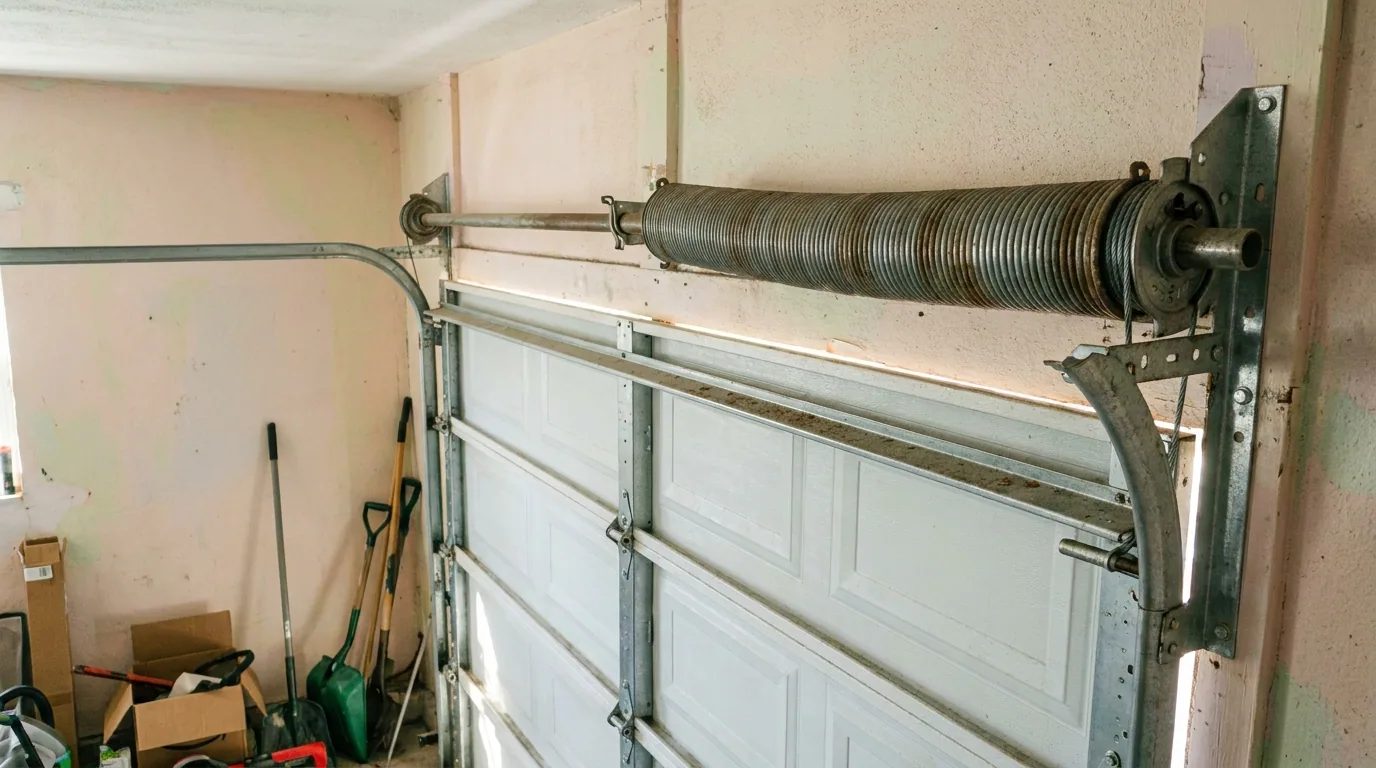
Lubricate the moving metal. A garage door lubricant, not a general-purpose spray, applied to the roller shafts, the hinge knuckles, and the bearing plates at the ends of the torsion bar quiets a surprising amount of noise. Do not lubricate the tracks themselves. The tracks are meant to stay dry so the rollers roll rather than slide, and a greased track collects grit and gets louder over time.
Tighten what has worked loose. Hinge bolts, the bolts holding the track brackets to the jamb, and the bolts on the opener's mounting brackets all loosen gradually. A socket set and a few minutes will deal with most rattles. Do not overtighten, and do not adjust the track position itself.
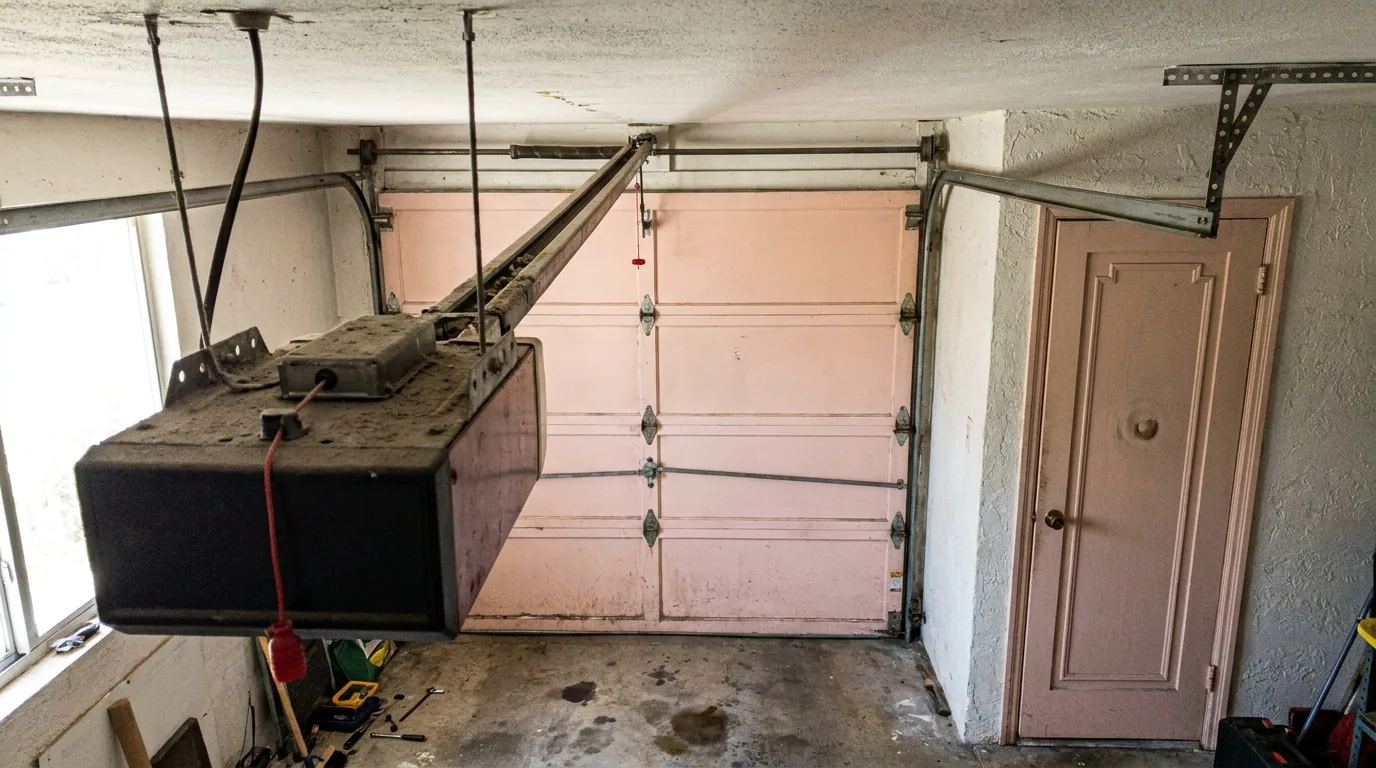
Check the opener's hanging brackets. The motor is usually suspended from the ceiling by metal straps or angle iron. If those have come loose or the fasteners have pulled slightly, the whole unit transmits vibration into the floor structure above it, which is exactly the structure under the bedroom.
What you should not touch: the springs, the cables, the bottom brackets, and anything inside the opener's drive train. Those parts store energy or carry the door's full weight, and they belong to a licensed and insured technician.
The parts that carry noise into the room above
Sound travels through structure as much as through air. A door that sounds acceptable standing in the garage can still thump in the bedroom because vibration is being carried into the floor joists by the hardware that ties the door and opener to the building.
Three things do most of that work. The first is the opener's ceiling mounts, which bolt the motor directly to the framing. The second is the track brackets, which anchor the vertical and horizontal tracks to the walls. The third is the door's own rollers, which transmit every bump in the track straight into the panels and from there into the frame.
This is where a technician can make a real difference. Isolation pads under the opener's mounting points, nylon rollers in place of steel ones, and a check that the track is straight and correctly anchored all reduce the amount of vibration that reaches the structure. A track that is slightly out of line makes the rollers bump at every joint, and that bump repeats through the whole cycle. A technician inspecting the springs and cables during the same visit will also confirm that nothing is binding and forcing the opener to work harder than it should.
When the opener is the source
If the noise is a grind or a hum from the motor housing, or if the motor runs and the door barely moves, the opener is the place to look. A stripped gear lets the motor turn without driving the door, and no amount of lubrication on the door will change that sound. Belt-drive and screw-drive openers are generally quieter than chain-drive units, and if the noise is a persistent problem in a bedroom-over-garage layout, replacing the opener is one of the more effective fixes available. That is a conversation to have with a technician who has heard the door run, not a decision to make from a specification sheet.
Salt air and worn hardware
In Miami Beach and the surrounding communities, salt air corrodes steel hardware faster than in drier settings, and corroded hinges and rollers get noisy before they fail outright. Some older hardware is simply worn past the point where lubrication helps. A tune-up and safety inspection is the practical way to find out which parts are worn and which are fine, and it is worth doing before a noise turns into a door that will not open.
If you have traced the noise as far as you can and it is still there, or if the door has started to feel heavy or hang unevenly, call (786) 709-9487. 911 Garage Door Repair & Service of Collins Miami works across Miami-Dade County, and the office can be reached at info@911garagedoorrepairmiami.com.