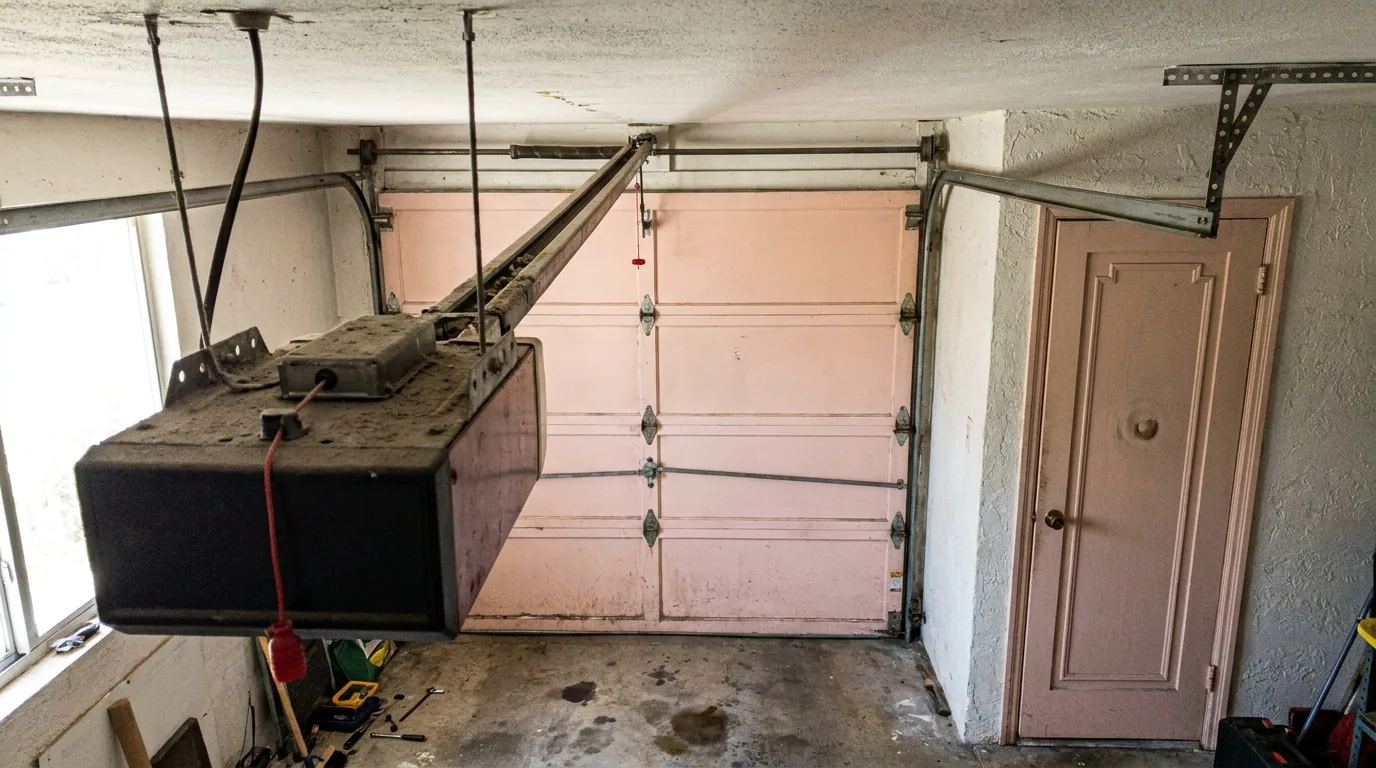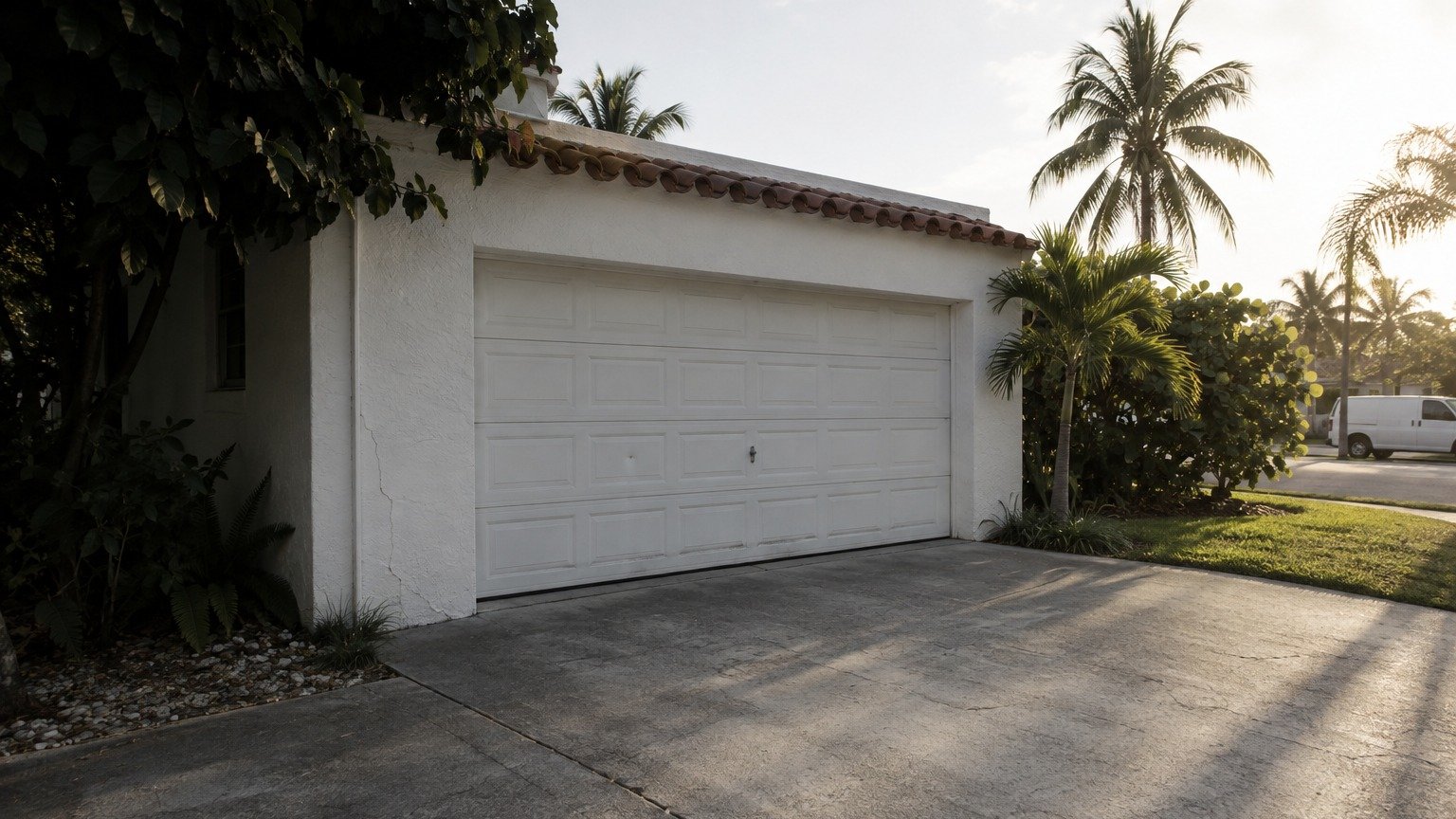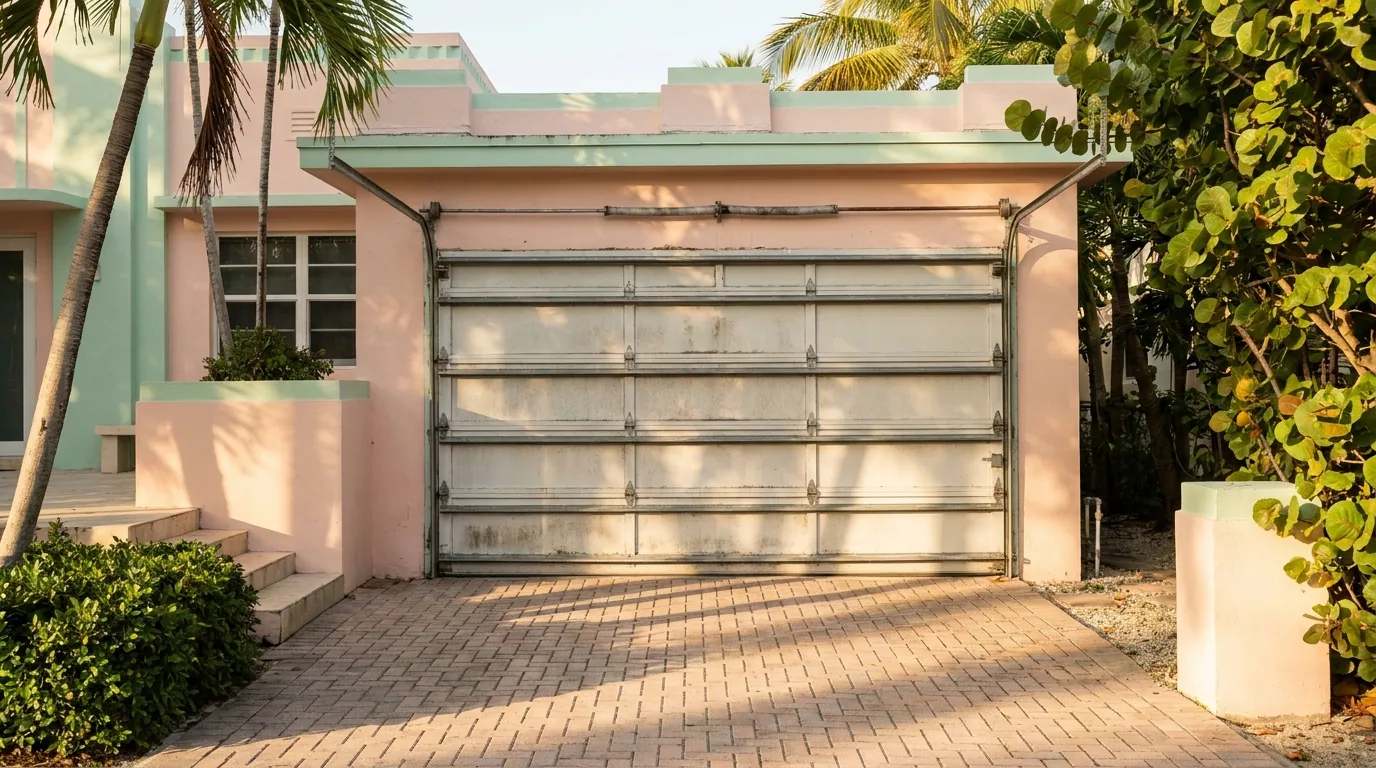
A garage door that works all morning and then sticks in the middle of the afternoon is a common call, and the pattern is worth taking seriously rather than dismissing as a mood. The door is not behaving differently because the hour changed. Something in the assembly or the opening around it is changing through the day, and the sun on a south-facing wall is the most reliable clue you have. The work is in separating the few things that can actually produce that pattern from the many that cannot, because the fix for a track that has moved is nothing like the fix for a roller that has dried out.
Before anything else, close the door and watch it through a full cycle with the garage empty. Note where in the travel it catches, whether the motor strains or the door simply stops, and whether the noise is new. Do this once in the morning and once in the late afternoon on a clear day. The difference between those two cycles tells you more than any single observation.
Start with the wall, not the door
A south-facing garage wall takes direct sun for the longest part of the day, and the heat load on that wall is real. What that heat does to the structure around the door is the part worth understanding. The opening the door sits in is framed by wood or masonry, and the track is anchored to that framing. When the wall and the framing warm through the afternoon, the opening can move slightly. A track that was plumb in the cool of the morning can be a fraction out by three o'clock, and a fraction is enough for a roller to bind.
This is why the symptom is so often a bind on one side rather than a door that refuses to move at all. If the door runs cleanly in the morning and drags in the afternoon, and the drag is worse on the side nearest the sun-hit wall, the track and its anchors are the first thing a technician should check. Do not loosen or adjust the track yourself. The track carries the door's weight and alignment, and moving it without the right reference points makes the problem worse.
What you can observe from outside the door
With the garage empty and the door closed, there are several things you can note safely without touching any moving part. These observations are what a technician will ask you for.
- Whether the door sits square in the opening, or whether one corner hangs lower than the others.
- Whether there is a gap along the top of the door that is wider at one end than the other.
- Whether the door feels heavier than usual when you lift it by hand with the opener disconnected, or whether it feels the same all the way up.
- Whether the noise at the start of a cycle is new, and whether it changes between morning and afternoon.
- Whether the sticking happens at the same point in the travel each time, or at different points.
A door that hangs at an angle, or that feels suddenly heavy, points to a spring or cable problem, and that is not a homeowner job under any circumstances. Springs and cables store energy and can cause serious injury. Stop there and call a technician.
The parts that dry out and tighten
Heat affects the door's hardware as well as the wall. Steel rollers turn in tracks that are lubricated, and hinges have knuckles that need lubrication to move freely. In a garage that runs hot through the afternoon, lubrication thins and migrates, and a roller that was turning quietly in the morning can start to drag or squeal later in the day. A dry steel roller squealing on the track is a certain cause of noise, and it is one a technician can confirm quickly.
Weather seals are the other part that behaves differently in heat. The seal along the bottom and sides of the door is there to keep weather and pests out, and a seal that has hardened can press against the frame more firmly as the day warms. If the door sticks only in the last few inches of travel, and the seal looks flattened or cracked, that is worth mentioning. Do not cut or adjust the seal yourself; a technician can tell whether it needs replacement or whether the door is simply meeting resistance it should not.
When the cause is the opener, not the door
Sometimes the door is fine and the opener is the part objecting. A motor that strains at the same point in travel, or that reverses partway up, is usually reporting a force setting or a travel limit that needs attention. These settings are adjusted at the opener, and the adjustment is not difficult, but it should be made against a door that moves freely by hand. If the door itself binds, raising the force setting to push through the bind hides the problem and puts strain on the opener's drive train.
One thing to rule out before anything else: a photo-eye that is blocked or misaligned will reverse a door that is closing, and only while it is closing. It has no role in a door that will not start or that opens a little and then reverses. If your door reverses before it reaches the floor, the photo-eye is not the answer, and the opener's travel and force settings are where a technician will look.
What to do with what you have found
Write down the pattern: the time of day, which side of the door binds, where in the travel it happens, and whether the noise is new. That record is genuinely useful, because it separates a heat-related track or hardware issue from a spring, cable, or opener problem. A tune-up and safety inspection is the right service for a door that has developed a seasonal bind, and it covers the track alignment, roller condition, hinge lubrication, and the balance of the door.
If the door is hanging crooked, feels heavy, or makes a noise that was not there last week, do not wait for the afternoon to test it again. Call (786) 709-9487 and describe what you have observed. 911 Garage Door Repair & Service of Collins Miami is licensed and insured and serves Miami-Dade County, including Miami Beach, Surfside, Bal Harbour, Sunny Isles Beach, Aventura, and the surrounding communities. The team is available Monday through Saturday from 7:00 AM to 8:00 PM, with emergency dispatch on Sunday and 24/7 emergency dispatch for urgent calls.