A garage door that opens by itself is unsettling in a way that a door which refuses to open is not. A stuck door is an inconvenience. A door that rises while the house is quiet suggests something is making decisions about your property without you. In practice the cause is almost always mechanical or electrical, and it falls into a small number of categories. What matters is separating them, because the fix for a mispaired remote is nothing like the fix for a failing limit switch, and guessing wastes time.
Before anything else, close the door and watch it through a full cycle with the garage empty. Note whether the motor runs when it happens, whether the door travels all the way up, and whether the light comes on. Those three observations narrow the list considerably.
The motor runs and the door goes up: something sent a signal
If the opener's motor actually engages and the door travels normally, the control board received an open command from somewhere. That somewhere is usually one of these:
- A remote in the house. A spare remote in a kitchen drawer, a handbag, or a car's visor can be pressed against something and transmit. This is more common than people expect, and it is the first thing to rule out. Take every remote in the household, remove the batteries, and see whether the door still opens on its own.
- A wall console with a stuck button. The button on the wall station can stick in the pressed position, especially in older units where the plastic has worn. A console that has been painted over during a renovation is a frequent culprit.
- A keypad with a failing membrane. Outdoor keypads take sun and salt air, and the contacts behind the buttons can degrade. A keypad that opens the door without a code being entered is failing, not secure.
- A neighbor's remote on the same frequency. Older openers on fixed codes can be triggered by another remote nearby. If the openings cluster around a particular time of day, this becomes more likely.
The test that separates these is straightforward. Unplug the opener, or switch off the circuit breaker that feeds it, and leave it off for a day. If the door stays down, the command is coming from a remote, console, or keypad. If it still opens with the power off, the opener is not the cause and you are looking at something else entirely, which is rare but worth confirming.
The motor runs briefly and the door reverses or stops
A door that starts up a few inches and then comes back down, or stops short of the fully open position, is not receiving an open command and then changing its mind. It is receiving a command and then losing it. The likely causes are a travel limit that has drifted out of adjustment, a force setting that is too low for the door's actual weight, or a logic board that is misreading the door's position. A door that has become heavier than it used to be, because a spring has lost tension or a roller has seized, can trip the force setting on its own.
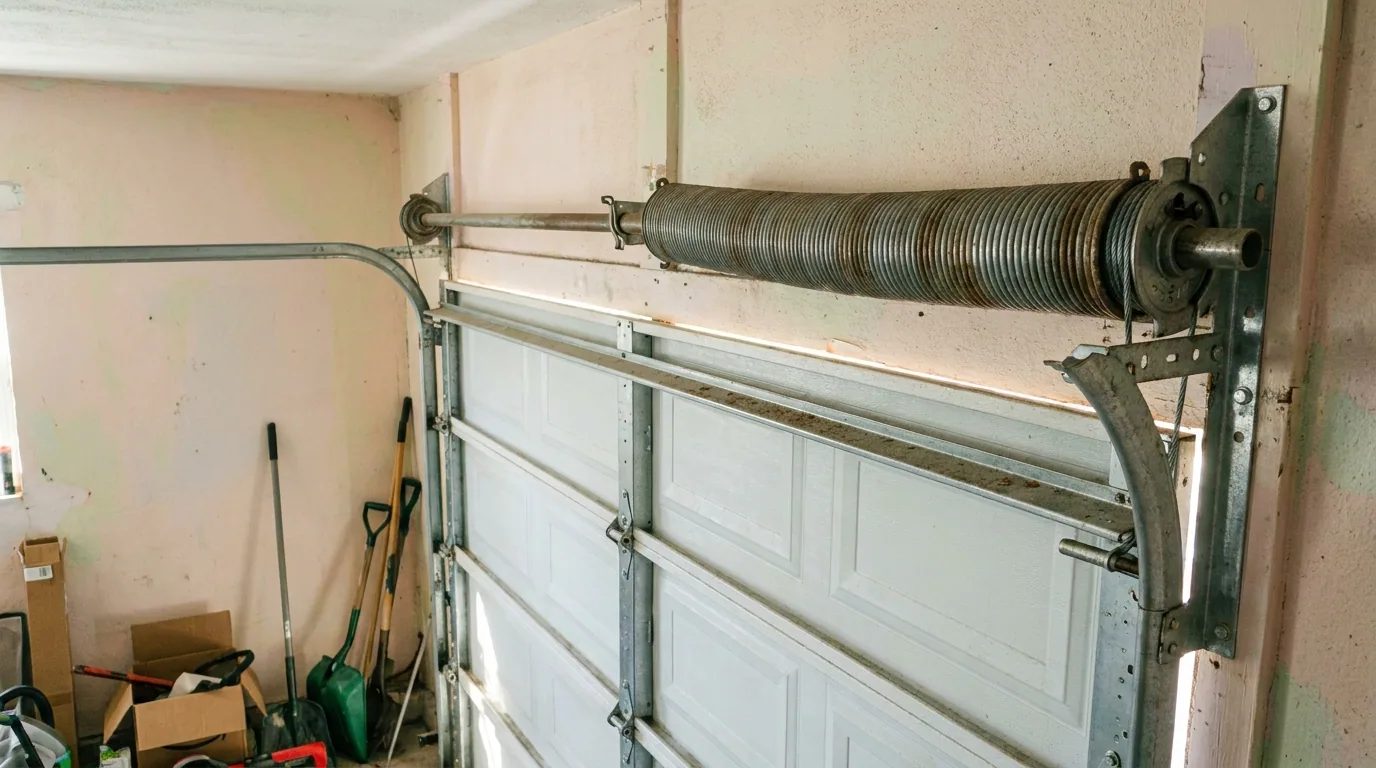
You can check the weight question without touching any moving part. Disconnect the opener using the emergency release, then lift the door by hand from the bottom section. A properly balanced door lifts with modest effort and stays where you put it, roughly waist height. A door that feels heavy, or that drops when you let go, has a spring or balance problem, and that is technician work. Do not attempt to adjust the springs or cables yourself.
The opener's light comes on and the motor hums but nothing moves
When the light activates and you hear the motor but the door does not travel, the opener is being commanded but the drive is not engaging. A stripped gear in the opener is one certain cause: the motor turns, the gear does not, and the door sits still. A broken or disconnected drive chain or belt produces a similar symptom. Either way, this is inside the opener housing and belongs to a technician.
Nothing happens at all, but the door is found open later
If the door is up in the morning and no one heard it move, the question is whether it was ever fully closed. A door that reverses during the closing cycle will end up open, and it will do so quietly if the opener's light is not noticed. Interruption during closing is what a blocked or misaligned photo-eye does: the safety beam is broken while the door is traveling down, and the door reverses. It has no role in a door that opens on its own from a closed position. A door that reverses before it reaches the floor, without anything in the beam's path, points to a travel limit or force setting instead.
Walk the closing cycle yourself and watch the full travel. If the door comes down and then goes back up without contact, the beam is not the explanation.
What to do before you call
Remove the batteries from every remote and see whether the behavior stops. Check the wall console for a button that does not spring back. Note the time of day the door opens and whether it correlates with anything. Then call a licensed and insured technician with those observations in hand, because they shorten the diagnosis considerably.
If the door is hanging crooked, if a cable has visibly snapped, or if the door feels heavy when lifted by hand, stop operating it and arrange service. A door in that condition can come down uncontrolled. 911 Garage Door Repair & Service of Collins Miami serves Miami-Dade County, including Miami Beach, Surfside, Bal Harbour, Sunny Isles Beach, Aventura, and the surrounding communities. Reach the office at (786) 709-9487 or info@911garagedoorrepairmiami.com. Weekday hours are 7:00 AM to 8:00 PM, Sunday is emergency service only, and emergency dispatch runs around the clock.