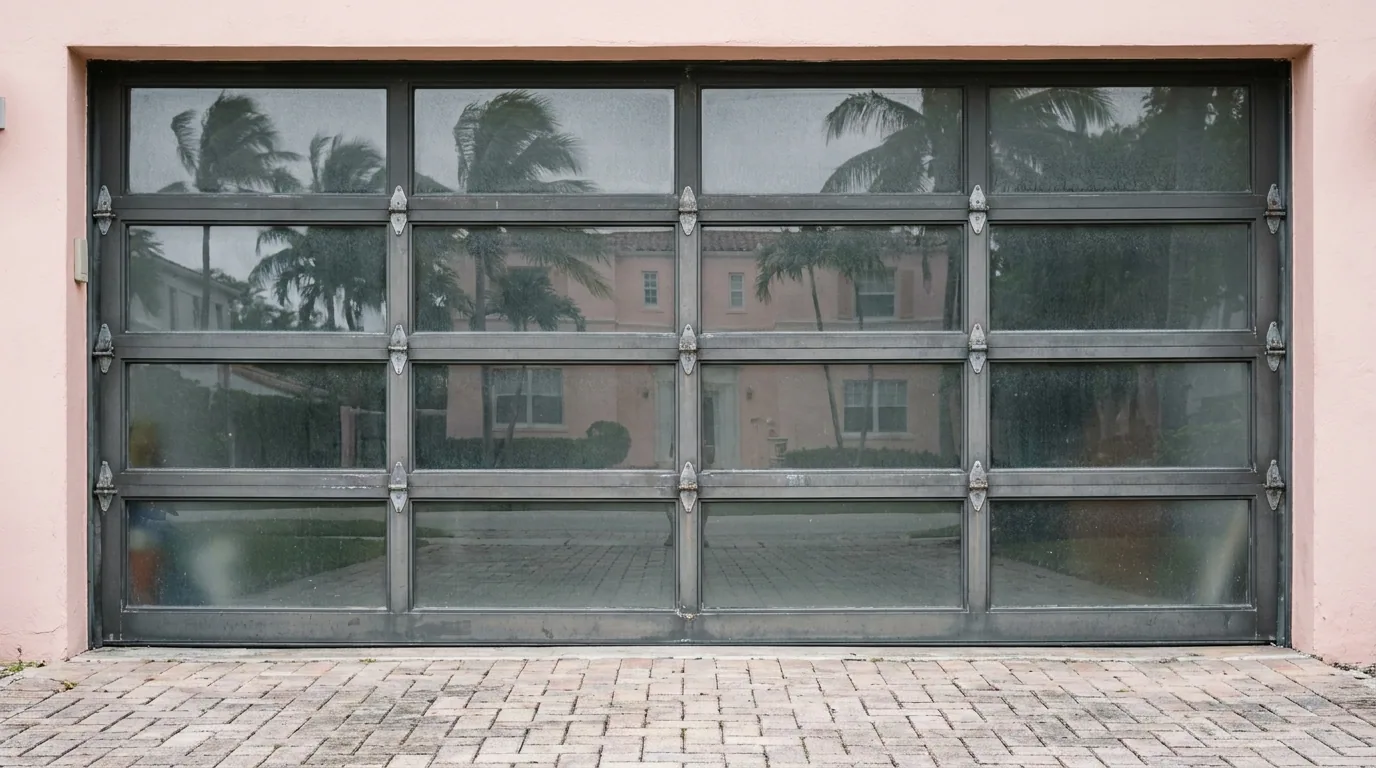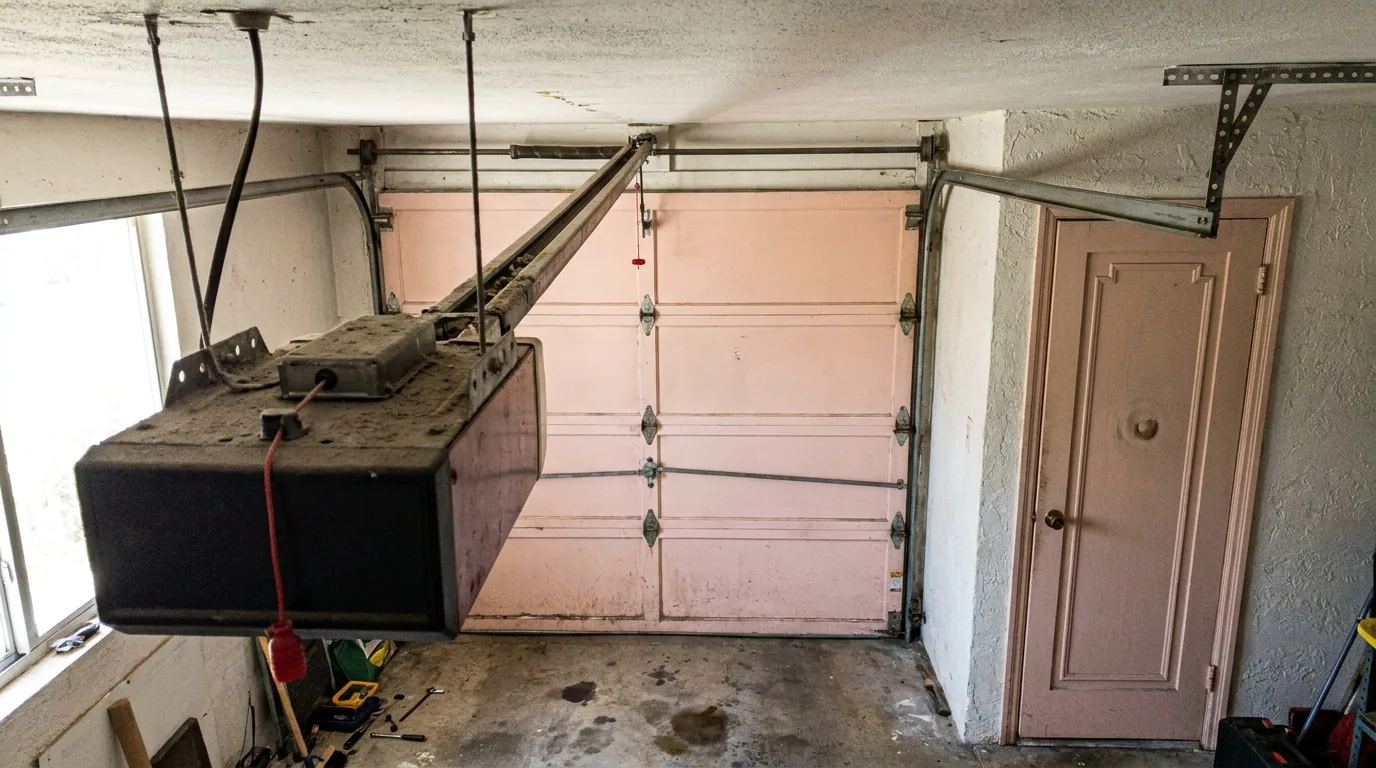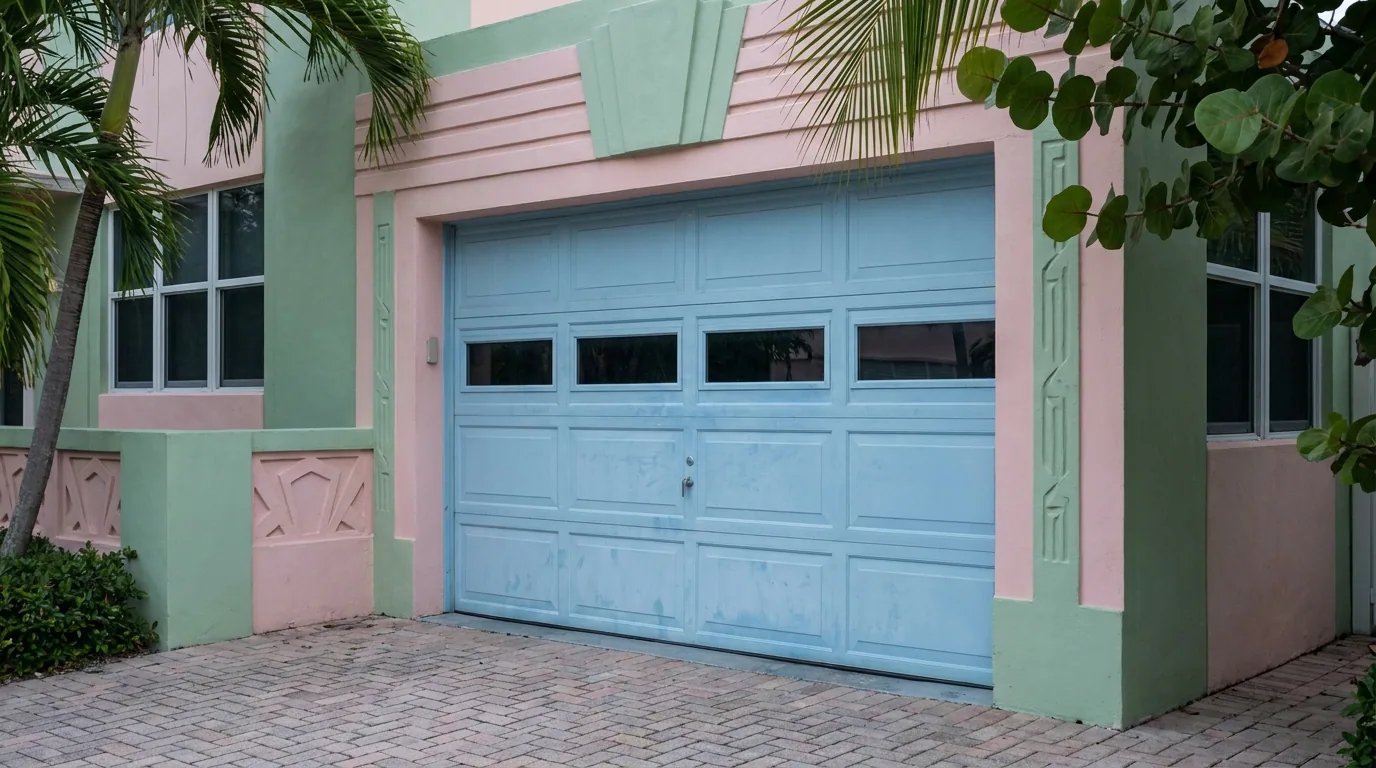
If you live in Miami-Dade County, your garage door is not just a door. It is a pressure boundary. When a storm pushes against it, the door and its track either hold that load or they do not, and the rating that tells you which is the windload rating. Most homeowners first meet this number on a permit, a sticker, or a spec sheet, and it is easy to nod at it without knowing what it actually promises. This article explains what the rating covers, how to find yours, and what to look at when you are not sure the door still meets it.
What a windload rating actually says
A windload rating is a statement of the pressure a door assembly is designed to resist, expressed in pounds per square foot, along with the direction of that pressure. It is not a single number for the door panel alone. The rating applies to the whole assembly: the sections, the hinges, the rollers, the track, the brackets, and the way the track is anchored to the wall. A door that carries a high rating on its label can still fail if the track has pulled loose from the jamb or if the brackets have corroded through.
Because Miami-Dade sits in the High Velocity Hurricane Zone, the requirements here are stricter than in most of Florida. That is why you will often see a Miami-Dade County product approval or a Florida product approval referenced on the door or its paperwork. Those approvals are tied to specific installation details: the anchor spacing, the substrate the track is fastened to, and the reinforcement that must be present. Changing any of those details can take the assembly outside its approval, even if the door itself is unchanged.
How to find the rating on your door
The rating is usually documented in one of three places. The first is a label on the door itself, often on the inside face of the top or bottom section, or on the end stile. The second is the permit paperwork from when the door was installed or replaced; in Miami-Dade, that paperwork should reference the product approval number. The third is the homeowner packet that came with the door, which may include an installation drawing showing anchor spacing and any required reinforcement.
If you cannot find any of these, do not guess. A technician can identify the door model from its hardware and section profile and then look up the approved assembly. That is also the right moment to check whether the track anchors match the drawing. In older buildings, it is common to find a door that was originally approved but has since been re-anchored with different fasteners or into a substrate that was not part of the approval.
What you can check from outside the door
You do not need to touch the springs, cables, or opener drive train to get useful information. With the garage empty and the door closed, stand back and look at the door as a whole. Is it sitting square in the opening, or is one side lower than the other? A door that hangs crooked may have a cable or spring problem, and that is a technician's job, but the crookedness itself is something you can see and report.
Look at the gap along the top and sides. A uniform gap is normal. A gap that has opened up on one side, or a door that no longer meets the header squarely, can point to movement in the track or the framing. Also listen at the start of a cycle. A new pop, scrape, or grind is worth describing when you call. None of this tells you the windload rating, but it tells you whether the assembly is still in the condition the rating assumed.
Why salt air matters for the rating
The rating is a design number. The door's ability to meet it depends on the condition of the steel. In the barrier-island communities, salt air corrodes hinges, rollers, brackets, and track fasteners faster than it does inland. A bracket that has thinned or a fastener that has rusted through cannot carry the load it was approved for, even if the door panel is pristine. This is why a periodic inspection of the hardware is not just about smooth operation. It is about whether the assembly still matches the approved configuration.
During a tune-up and safety inspection, a technician checks the track anchors, the bracket condition, and the hinge and roller wear, and compares what is there to what the approval calls for. If a bracket is corroded or an anchor is loose, that is a repair item, and it should be addressed before the next storm season rather than after.
When the rating may no longer apply
Several common changes can take a door outside its approved assembly. Replacing a section with a different model, adding a strut that was not part of the approval, changing the track anchors, or installing a different opener with a different mounting arrangement can all matter. Sometimes the change is harmless and sometimes it is not, but you cannot tell by looking at the door alone. The approval drawing is the reference.
If you are unsure, the safe course is to have the assembly inspected and the documentation checked. For a door that is being replaced, the new door should come with its own approval that matches the opening and the substrate. In Miami-Dade, that paperwork is part of the job, not an afterthought. If you have questions about your own door, you can reach a technician at (786) 709-9487 or info@911garagedoorrepairmiami.com.