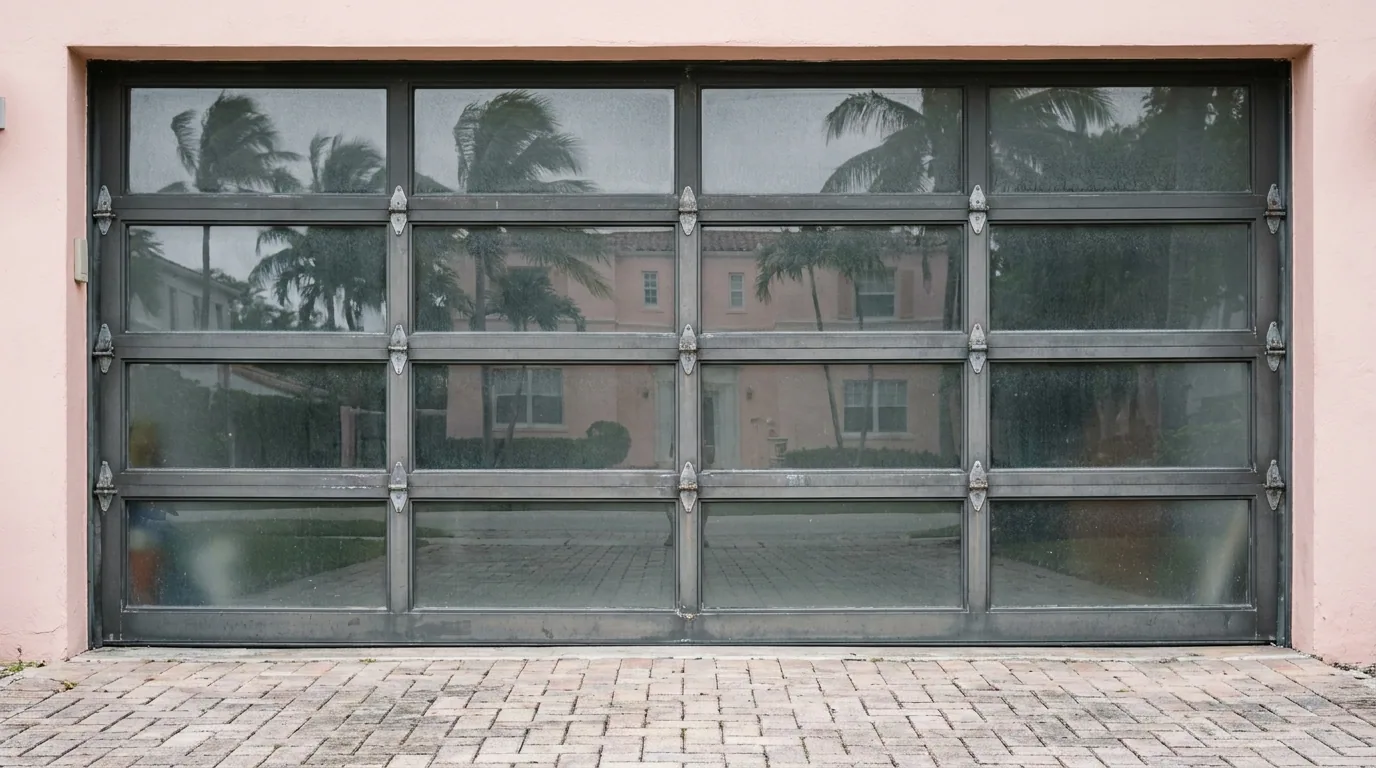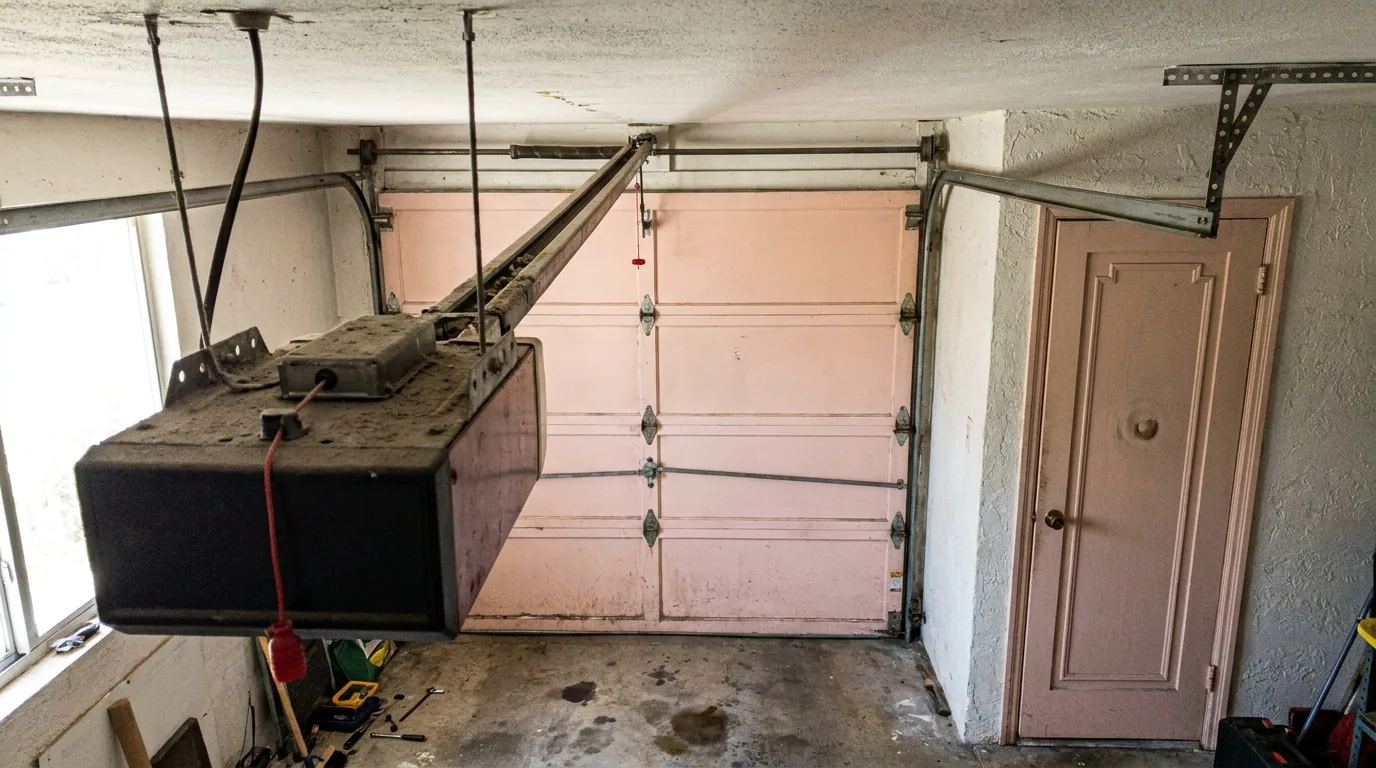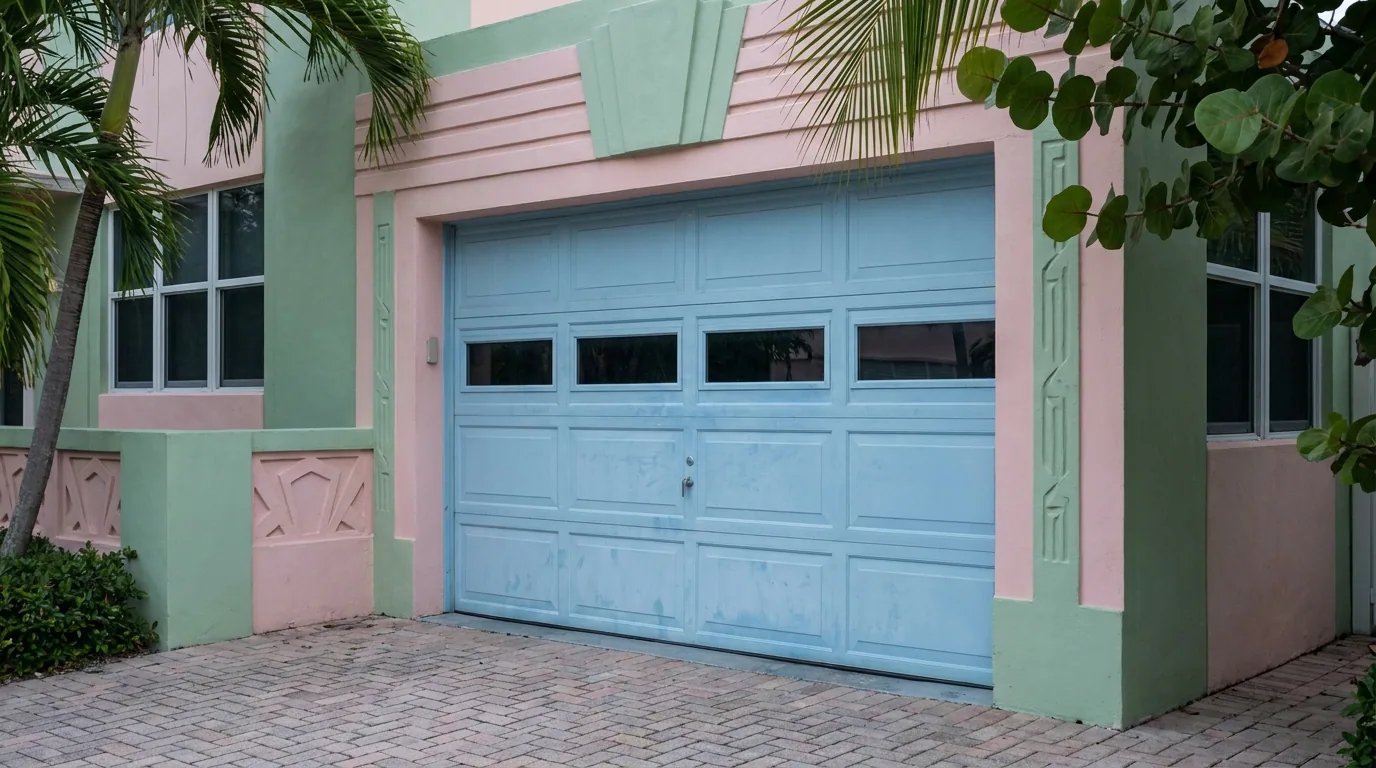
After a storm passes, a bowed garage door panel is one of the most common things a homeowner notices. The door may have worked fine before the weather, and now a section looks curved, dented, or pushed in. The instinct is to assume the wind did it. Sometimes that is correct. Often it is not, and the difference matters because the fix for a panel that was overloaded by wind is not the same as the fix for a panel that was already weak and simply gave way when the storm added pressure. Before you call anyone, it helps to understand what you are looking at and what you can safely check yourself.
Start with what you can see from outside the door
With the garage empty and the door closed, stand outside and look at the door as a whole. You are not inspecting springs, cables, or the opener drive train. You are looking at the door face and how it sits in the opening.
- Where is the bow? A single panel that curves inward across its width, with the rest of the door straight, points to that panel taking a load or being struck. A door that sits crooked in the opening, with one side higher than the other, points to something else entirely, usually a cable or spring problem.
- Is there a gap along the top or sides? A new gap where the door meets the header or the jamb can mean the door has shifted, not just that a panel bent.
- Does the door feel heavier when you lift it by hand? You can test this safely with the opener disconnected, using the manual release, as long as you keep your hands away from the springs, cables, and the opener rail. A door that suddenly feels much heavier than before is a sign that a spring is no longer carrying its share of the weight.
- Is there a new noise at the start of a cycle? A pop, a scrape, or a groan that was not there before the storm is worth noting.
None of this requires you to touch or inspect the springs or cables. Those are under high tension and belong to a technician. What you are doing is gathering observations that will help narrow the cause.
Windload damage: what it actually looks like
Miami-Dade County sits in the High Velocity Hurricane Zone, and garage doors here are rated and installed to resist specific wind pressures. When a storm exceeds what the door was designed for, or when debris strikes the door, the result is usually visible as a permanent deformation. A panel that is bowing after a storm may have been pushed past its elastic limit. The metal does not spring back. You may see a crease, a dent with sharp edges, or a curve that runs the full width of one section.
Windload damage is also not always confined to the panel. The force that bows a panel also travels into the hinges, rollers, and track. A door that looks only slightly bowed but now binds or scrapes may have a track that has been pushed out of alignment. That is why a bowed panel should be looked at as part of the whole door, not as an isolated cosmetic issue.
When the storm is not the cause
A storm can expose a weakness that was already there. A panel that was already fatigued, a hinge that had loosened, or a roller that had worn can fail under a load that a sound door would have handled. In older buildings, cast-iron and original hardware are common, and that hardware may have been near the end of its life before the weather arrived. Salt air on the barrier islands also corrodes steel hardware faster than inland, so springs, cables, and hinges can weaken sooner. A bow that appears after a storm may be the final step in a process that started long before.
There is also the possibility that the bow is not new at all. A panel can bow gradually over months, and a storm is simply when someone walks outside and notices it. If you cannot say with confidence that the door was straight before the storm, treat the cause as unknown rather than assuming wind.
What to check before you call
You can safely do a few things that will make the service call more efficient:
- Watch a full cycle with the garage empty. Note whether the door travels smoothly, whether it hesitates, and where any noise occurs.
- Note the door's behavior by hand. With the opener disconnected and the door closed, lift it manually. If it feels heavy or uneven, stop and note that. Do not force it.
- Look at the door from outside. Note the location and shape of the bow, any gaps, and whether the door sits level in the opening.
- Write down what you observed during the storm. Wind direction, debris, and whether the door was closed or open are all useful.
What you should not do is attempt to adjust the springs, cables, or opener drive train yourself. Those components store energy and can cause serious injury. A technician has the tools and training to release that energy safely.
What a technician will do
When a technician arrives, the first step is to assess the door as a system. That means checking the springs and cables, the track alignment, the rollers and hinges, and the opener's force and travel settings. A bowed panel may need replacement, but the technician will also determine whether the bow is a symptom of a larger problem, such as a failing spring that has been letting the door run heavy. Replacing a panel without addressing the underlying cause can lead to the same failure again.
If you are in Miami Beach, South Beach, North Beach, Surfside, Bal Harbour, Bay Harbor Islands, Sunny Isles Beach, Golden Beach, Aventura, North Miami Beach, North Miami, Miami Shores, Brickell, Downtown Miami, Hallandale Beach, or Hollywood, and you have a door that is bowing after a storm, the safest next step is to have it looked at by a licensed and insured technician. You can reach 911 Garage Door Repair & Service of Collins Miami at (786) 709-9487 or info@911garagedoorrepairmiami.com. The office is at 6767 Collins Ave, Unit 509, Miami Beach, FL 33141. Hours are Monday through Saturday, 7:00 AM to 8:00 PM, with Sunday emergency service only and 24/7 emergency dispatch.
A bowed panel is a visible sign that something has changed. Whether that change was caused by the storm or revealed by it, the door is telling you it needs attention. The observations you make before the technician arrives will help get to the right fix faster.